
By Kshitij, Bells N Blooms Weddings
A hotel proposal, a wedding planner’s proposal and a decor quotation can all promise a beautifully managed celebration. The useful question is what each team will actually deliver, and who will connect the work between them.
Choose your starting point
- Venue or key suppliers still undecided: discuss full planning, including the decisions you want the team to help make.
- Bookings made, coordination still unowned: ask for a defined remaining-work or wedding-execution assignment. Share existing contracts and the outstanding task list.
- Coordination already covered: decor-only may fit if a named person can manage the wider schedule and supplier interfaces.
- The hotel already covers the help you need: check its written deliverables before paying another team to duplicate them.
These are starting points for an enquiry, not fixed packages or a promise of availability. The agreed proposal should identify exactly what the appointed team takes on.
For an Uttarakhand destination wedding, start with the decisions you want help making: finding a suitable property, coordinating suppliers, managing guest arrangements, designing the functions or running the celebrations. Then compare written responsibilities. Full planning, hotel-led coordination and decor-only can each be the right choice when the remaining work has a capable owner.
This guide helps you choose that scope before comparing fees. It is particularly useful when you are planning from another city, have already booked a hotel, or are unsure whether its wedding team covers everything you need.
Make this decision while the important choices are still open. If you want help comparing properties, appointing a team only after every booking is fixed leaves it less room to shape the plan. If your hotel, schedule and suppliers are already confirmed, ask for a proposal based on that existing work. Share the actual documents and outstanding questions so the next team can identify what it can take on, rather than quote for an imagined starting point.
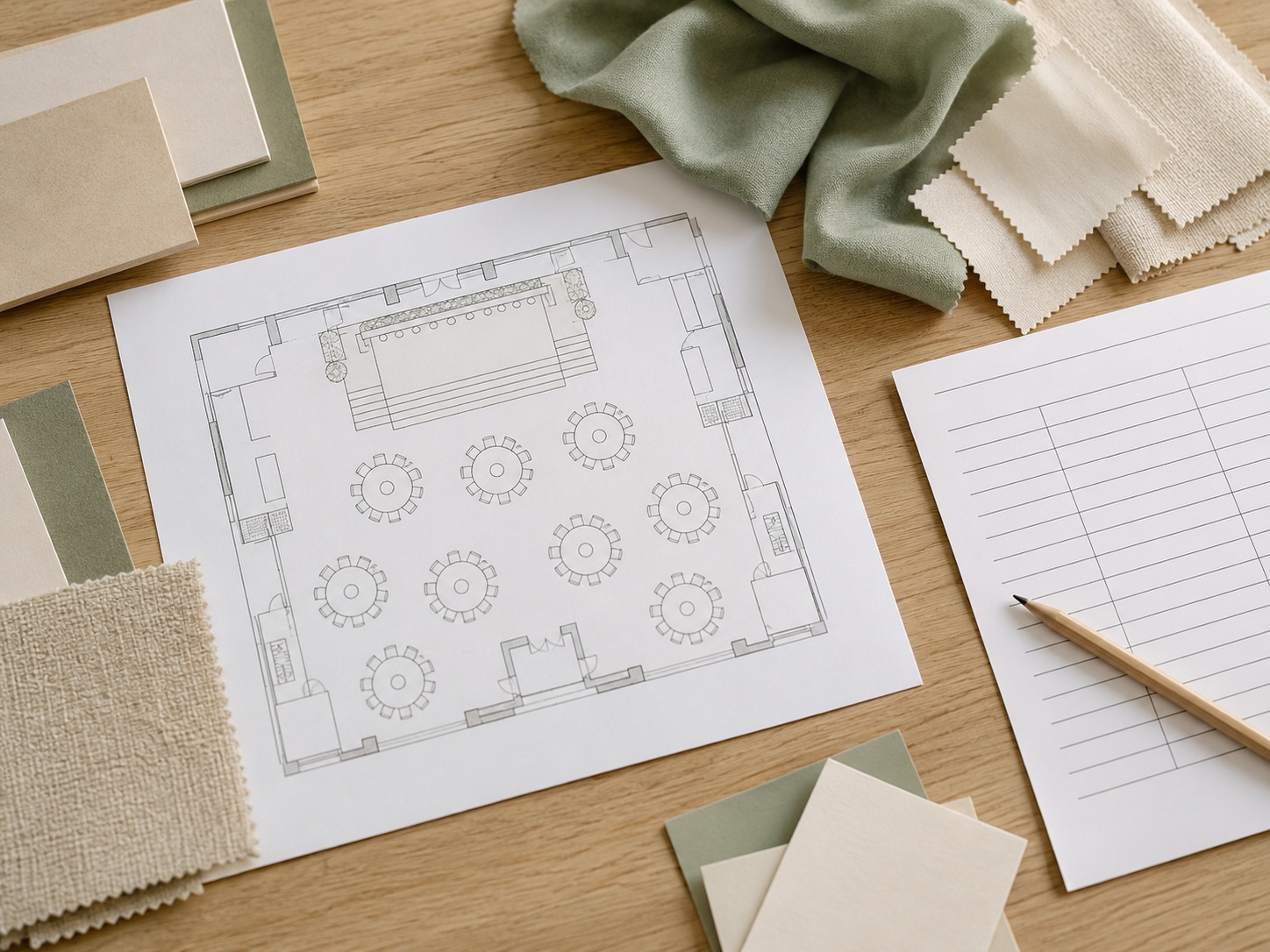
Begin with the help you actually need
Write down what is already decided, what is booked and what remains open. Include the destination, property, functions, overnight guests, day guests and number of nights. A couple with a confirmed hotel and reliable suppliers has a different brief from a family choosing between Mussoorie, Rishikesh and Dehradun.
Next, decide how much coordination your family genuinely wants to retain. Someone may enjoy choosing flowers but have no capacity to chase arrival details or resolve competing supplier requests. Will that person also be participating in rituals? A responsibility assigned to a relative is only useful if they can perform it when needed.
Use the three models below as descriptions, not standardised packages. Businesses use the same service names for different deliverables.
| Service model | Useful when | Clarify before appointing |
|---|---|---|
| Full wedding planning | You want one appointed team to coordinate the wider celebration. | Functions, suppliers, guest arrangements, decisions and on-site coverage included. |
| Hotel-led coordination | The property’s written offer covers the assistance your wedding needs. | Which work beyond hotel operations is included and who manages remaining tasks. |
| Decor-only | Overall coordination already has an owner and you need defined design and execution. | Areas, quantities, production, crew, installation, removal and interfaces with other teams. |
Full planning is worth considering when decisions depend on one another and your family does not want to coordinate them personally. Ask whether venue shortlisting, quote comparisons, guest communication, transport coordination and supplier follow-ups are included. A service title does not establish unlimited revisions, round-the-clock staffing or every third-party expense.
Hotel support can be substantial. Hyatt Regency Dehradun describes a dedicated events team alongside its venues and catering. Taj Rishikesh advertises an event team. JW Marriott Mussoorie describes assistance with decor, menus, budgets and supplier selection. These official descriptions are reasons to examine the hotel’s offer carefully, rather than assume that it only provides rooms and food. [1, 2, 3]
Decor-only also needs a precise definition. A proposal may cover creative development and physical production while another team owns guest hospitality, entertainment and the combined schedule. Ask what the decorator supplies directly, what is sourced separately and who checks that those arrangements work together.
A booked hotel does not automatically make decor-only the right fit. You may still need a team to coordinate outstanding suppliers, guest arrangements and execution. Describe that remaining assignment when requesting a proposal.
Turn the proposal into a responsibility list
For every important task, record one accountable lead, the people providing inputs, the person approving the decision and the evidence that the task is complete. Several teams can contribute; one named lead should confirm that the pieces are ready.
Take guest arrivals. The family supplies accurate travel information. A transport supplier provides the agreed vehicles and drivers. The hotel confirms arrival and room-access arrangements. Someone still needs to reconcile the list, tell guests where to meet and update the plan after a changed booking. Ask which team has accepted that coordination role.
Keep room allocation separate from room availability. If the hotel holds a block, who allocates households, records changes and sends the final list? Who handles an overflow property? Our wedding room blocks and resort buyouts guide explains the accommodation questions to settle before confirming the wider plan. [4]
Apply the same discipline to design. Who approves the final layout with the venue, confirms dimensions and production requirements, and checks that catering, sound and decor can operate within it? A concept image cannot answer those questions. Use our venue capacity and floor plan guide when testing the furnished arrangement. [5]
Workstream
Evidence to ask for
Budget and purchasing
A dated cost sheet showing approved, provisional and excluded items.
Design and production
An approved design list, layout and installation and removal plan.
Guests and hospitality
A named owner for rooming, arrivals, help requests and departures.
Supplier coordination
A contact list, agreed reporting times and clear handover responsibilities.
On-site decisions
Named leads, coverage hours and an agreed spending approval route.
Ask each provider to mark its responsibilities as included, optional or excluded. Do not fill blanks with assumptions. If two teams both offer supplier coordination, define the boundary so they are not giving different instructions. If nobody owns a task, assign it before treating the wedding plan as complete.
Use the printable responsibility worksheet
Download the printable planning responsibility worksheet (PDF, 2 pages). The blank matrix gives each task an accountable lead, approval owner, deadline, included/optional/excluded status, cost reference and unresolved question. Name the family, hotel, planner and decorator leads before filling it in together.
The second page is a fictional worked example showing how responsibilities can be split. Replace every example assignment with your written agreement; it does not define standard BnB or hotel services. Keep unanswered items visible and give each one an owner and answer date.
Specify decor beyond the reference image
A decor brief becomes easier to compare when it lists the actual areas being styled: entrance, ceremony setting, stage, guest seating, lounges, tables and signage. Add dimensions or quantities where they affect the result. Identify the approved materials and the choices that remain provisional.
Ask whether the quoted scope includes furniture, decorative lighting, technical lighting, transport, installation crew, supervision and removal. These are questions, not a claim that every decorator bundles them. Confirm which power and technical requirements must be agreed with the hotel or another supplier.
If an element will be reused between functions, ask how it will be moved, by whom and in what access window. Approve the second setting too. Reuse can change the work required; it should not quietly become a promise of an identical result at no additional cost.
Keep a record of what you approve. Label each reference as an overall direction, a particular detail or an agreed deliverable. If a material or flower choice needs an alternative, ask how substitutions will be proposed and approved. This makes the conversation about the elements that matter to you, and gives the production team something more definite than a collection of saved images.

A real example: three settings at Glenville
For Virangana and Chirag at Glenville Resorts & Spa, Dehradun, BnB Weddings handled planning and decor across the haldi, sangeet and wedding. The published Glenville portfolio shows marigold haldi settings, a deep-green sangeet and a white-and-gold wedding. Within the sangeet, green drapes, floral details and chandelier light connect the entrance, stage and guest areas. Those are distinct areas to name in a decor brief, rather than treating one stage reference as the entire function.
The portfolio photographs are credited to Visionary Swarnima. They show the finished work; they do not establish a standard package, price or supplier contract. The concept images in this guide remain labelled as illustrations.
Test the scope with one realistic change
Before appointing a team, work through a hypothetical request: after the design is approved, your family adds a live performance to the sangeet.
The artist may need a different stage arrangement, sound inputs, equipment access and a rehearsal window. Guest seating or dinner service could be affected. Ask who collects the requirements, checks them with the venue, obtains revised supplier costs and updates the combined plan.
Then ask who approves any additional spending. The planner might coordinate the revision while the hotel confirms its operating arrangements and the decor and technical teams revise their own deliverables. The exact allocation depends on the agreed scope. What matters is that nobody assumes another team has already checked the change.
A useful answer names the lead and the next steps. “We will manage everything” leaves too much unresolved. Have the agreed revision recorded with its cost and effect on the schedule before it becomes an instruction to suppliers.
Compare the complete commitment
Put competing offers against one common brief. Separate the planning or coordination fee from decor production, hotel costs, transport, entertainment and other supplier charges. Ask whether each figure is confirmed, estimated or dependent on a later selection. Record quoted taxes and additional charges explicitly rather than applying an assumed percentage.
Where a hotel already includes a service, identify it on the comparison sheet so it is not counted twice. Where a provider coordinates another supplier, distinguish coordination from that supplier’s invoice. A proposal can appear lower simply because a different party will bill for the missing work.
Review coverage as carefully as price. Which functions are attended? Is preparation-day supervision included? Who is available during simultaneous guest arrivals and installation? How are crew travel, accommodation, meals and any additional working hours treated?
Ask about payment milestones, the process for changing the brief and the applicable cancellation terms before committing. There is no useful universal planner fee or decor price without the assignment behind it. For a destination-specific budget structure, our Rishikesh wedding cost guide separates the wider cost categories. [7]
Questions to settle before you say yes
Use this checklist with the hotel and the team you intend to appoint. Keep the answers in one shared version of the plan.
- Which decisions and tasks will the family continue to own?
- Who is the named lead before the wedding and at each function?
- Which suppliers are coordinated, and who approves their appointments and payments?
- Who confirms venue access, layouts, installation and removal arrangements?
- Who owns guest communication, rooming changes and transfers?
- What is included in design development, revisions and on-site execution?
- Which costs remain provisional, excluded or payable directly to others?
- Who authorises additional spending and circulates approved changes?
Frequently asked questions
Do we need a planner if the hotel has a wedding team?
Possibly, but it depends on the hotel’s offer and the work you want to retain. Compare its written deliverables with your responsibility list. If all the necessary work has an owner you trust, you may not need a second team performing the same tasks.
Can we book decor-only after confirming our hotel?
Yes, it can be a suitable approach when someone already owns the wider coordination. Before finalising the decor brief, agree the venue’s access arrangements, production requirements and the responsibilities shared with catering, entertainment and other suppliers.
Does full planning include the venue and guest stay?
The phrase alone does not tell you whether hotel charges are included, paid directly or only coordinated. Ask for a cost sheet separating planning, decor, accommodation, meals, venue and other celebrations-related expenses.
Can one team handle planning and in-house decor?
That is a service model to consider, including at Bells N Blooms. Check the agreed deliverables and staffing rather than assuming one appointment removes every external dependency. The hotel and other suppliers still need clear responsibilities.
What should we send in our first enquiry?
Share your dates or month, destination or shortlisted venue, overnight and day-guest numbers, nights and functions. State what is booked and whether you need full planning with decor or decor-only. Include the total wedding budget and any separate planning or decor allocation.
Bells N Blooms is a destination wedding planning and in-house decor business. When you enquire, tell us your total wedding budget including venue, stay and celebrations, as well as the scope you want us to handle. In our enquiry form, use “Approx. Planning / Decor Budget” for that separate allocation; it excludes venue, accommodation, catering and taxes. In “Tell us about your wedding”, add your total wedding budget including those wider costs, what is already booked, overnight and day-guest numbers, nights, functions and the help you need. Start a conversation through our contact page, or explore our wedding decor services. [8, 9]
Sources and further reading
- Hyatt Regency Dehradun weddings
- Taj Rishikesh event venues
- JW Marriott Mussoorie events and weddings
- Wedding room blocks and resort buyouts
- Wedding venue capacity and floor plans
- Virangana and Chirag at Glenville
- Rishikesh destination wedding cost guide
- Contact Bells N Blooms
- Wedding decor and in-house production