
Build the itinerary around your guests
Begin your two-night wedding itinerary with the hours your guests can actually use. Their arrival, room access, meals, changing time and departure bookings determine where the celebrations fit. Fix the essential ceremony requirements with your families and officiant, then build a programme that allows people to reach those moments without rushing through everything around them.
This guide works through that sequence for an Uttarakhand destination wedding, from the first pickup to the final checkout. The sample timings are invented planning examples, ready to be adjusted to your family and venue.
Count the hours inside the booking
Two nights can sound like three full celebration days. The room-access window may be shorter. For example, JW Marriott Mussoorie currently publishes a 3 pm check-in and noon check-out. On those standard timings, a two-night stay runs from 3 pm on day one to noon on day three: 45 hours. Your written booking may specify different arrangements. [1]
If a hypothetical guest spends eight hours asleep on each of the two nights, 16 hours are already allocated, leaving 29 before meals, changing, movement and other needs. This is time arithmetic, not a sleep recommendation or a promise of 29 event hours. Late arrivals and early departures reduce the usable window further.
Keep room access and event-space access on separate lines. A confirmed bedroom does not establish when the decor team can enter a lawn or when a hall must be handed back. For accommodation quantities and contract questions, use our room blocks and resort buyouts guide. [3]
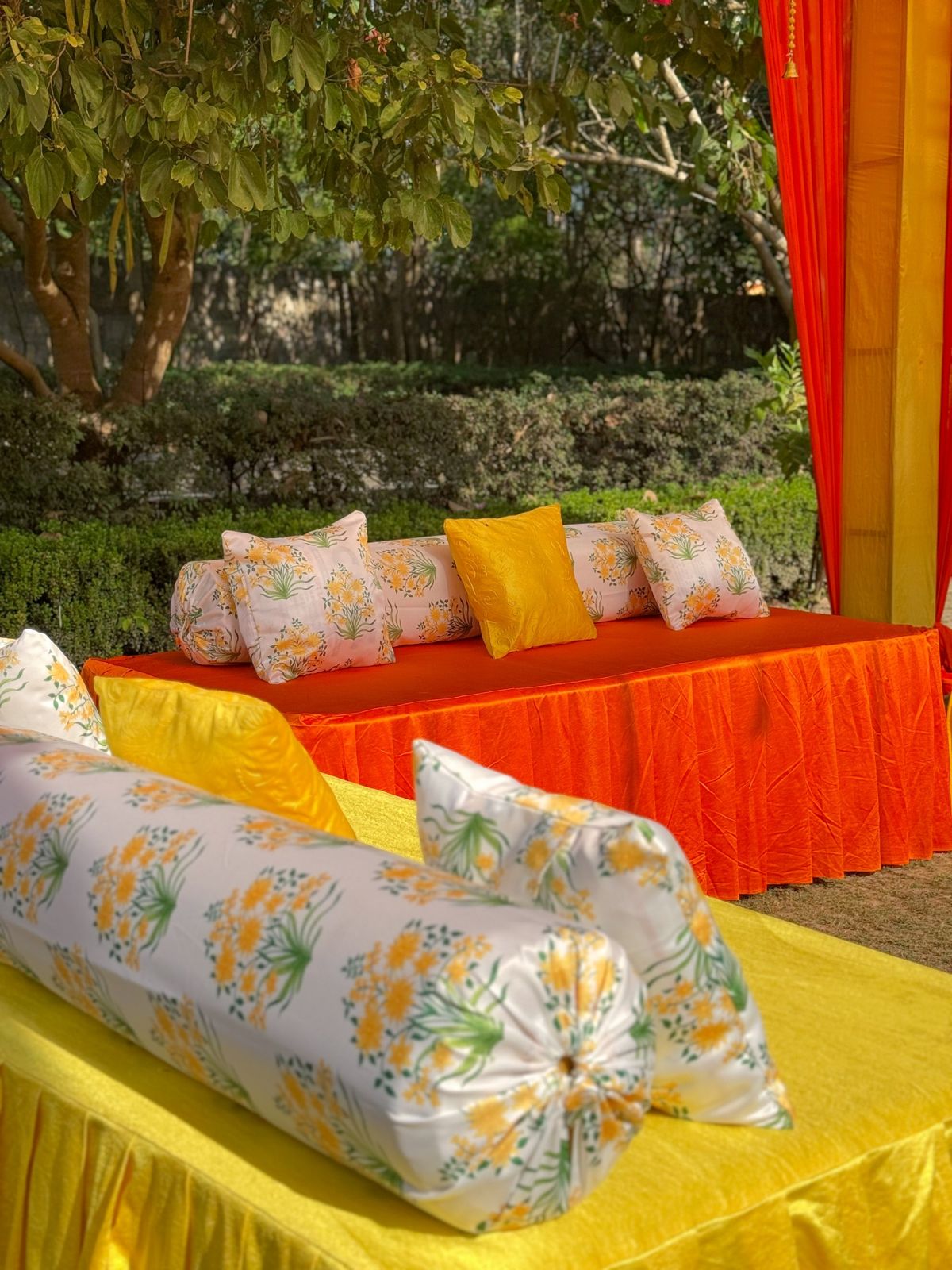
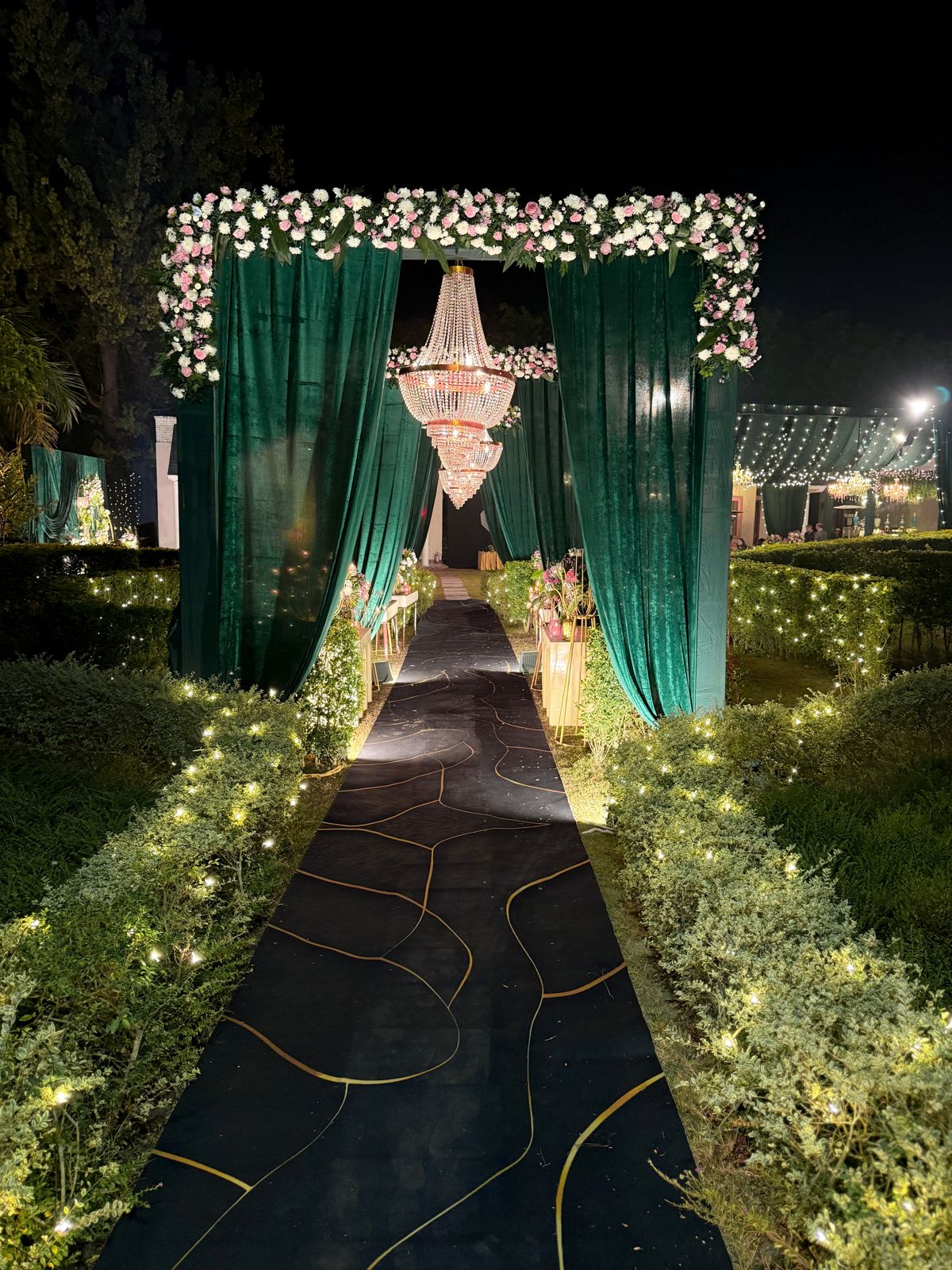
Virangana and Chirag at Glenville Resorts & Spa, Dehradun. Planning and decor by BnB Weddings. Photography by Visionary Swarnima. These photographs illustrate the settings only; they do not establish this article's hypothetical timings or any hotel's operating arrangements. [6]
Build arrival waves around readiness
Start with a travel-group list: confirmed arrival point and time, people travelling together, hotel, luggage needs and a reachable contact. Ask guests privately about practical assistance they want. Keep identification documents and personal details out of the programme circulated to everyone.
A flight landing is only one step. Baggage collection, meeting the driver, loading, the road journey and the hotel desk come before changing for a function. Check each step against the exact property address and actual travel date.
Marriott lists Jolly Grant Airport approximately 65.7 km from its Mussoorie property. It also states no shuttle service while separately listing a hotel car on request. Distance does not supply a transfer duration, and the transport arrangement still needs confirmation. [1]
For each group, calculate its earliest realistic function-ready time: take the later of completed check-in and confirmed room availability, then add the agreed settling, changing and movement allowance. Give early arrivals somewhere confirmed to wait and eat if bedrooms are not yet available.
| Hypothetical group | At hotel | Check-in and room ready | Function-ready |
|---|---|---|---|
| Wave A | 1.30 pm | 3 pm | 4 pm |
| Wave B | 4.30 pm | 5 pm | 6 pm |
Check the arrival plan at household level as well as by vehicle. Someone sharing a room may reach the hotel much earlier than their companion. Decide who can receive the key and what happens if that guest needs to change before the room is released. Record the hotel's answer instead of promising early access in the invitation.
These invented groups each have a one-hour allowance after room access. A 5 pm compulsory welcome would work for wave A and clash with wave B. A 7 pm first shared celebration provides one hour beyond wave B's assumed readiness. Test that margin against real bookings; it is not a standard buffer for every journey.
Anchor the ceremony with the right people
Ask the families and officiant which rituals require particular people, what timing is genuinely fixed and how much time the full sequence needs. Then work backwards through getting ready, photographs, movement and any processional arrangements. Guests, the couple and participating relatives may need different reporting times.
If an essential relative cannot reach the venue in time, settle that conflict before printing the itinerary. Options might include an earlier arrival, an additional night or revising a flexible function. Avoid treating a shorter meal or rushed outfit change as the automatic solution.
A worked two night programme
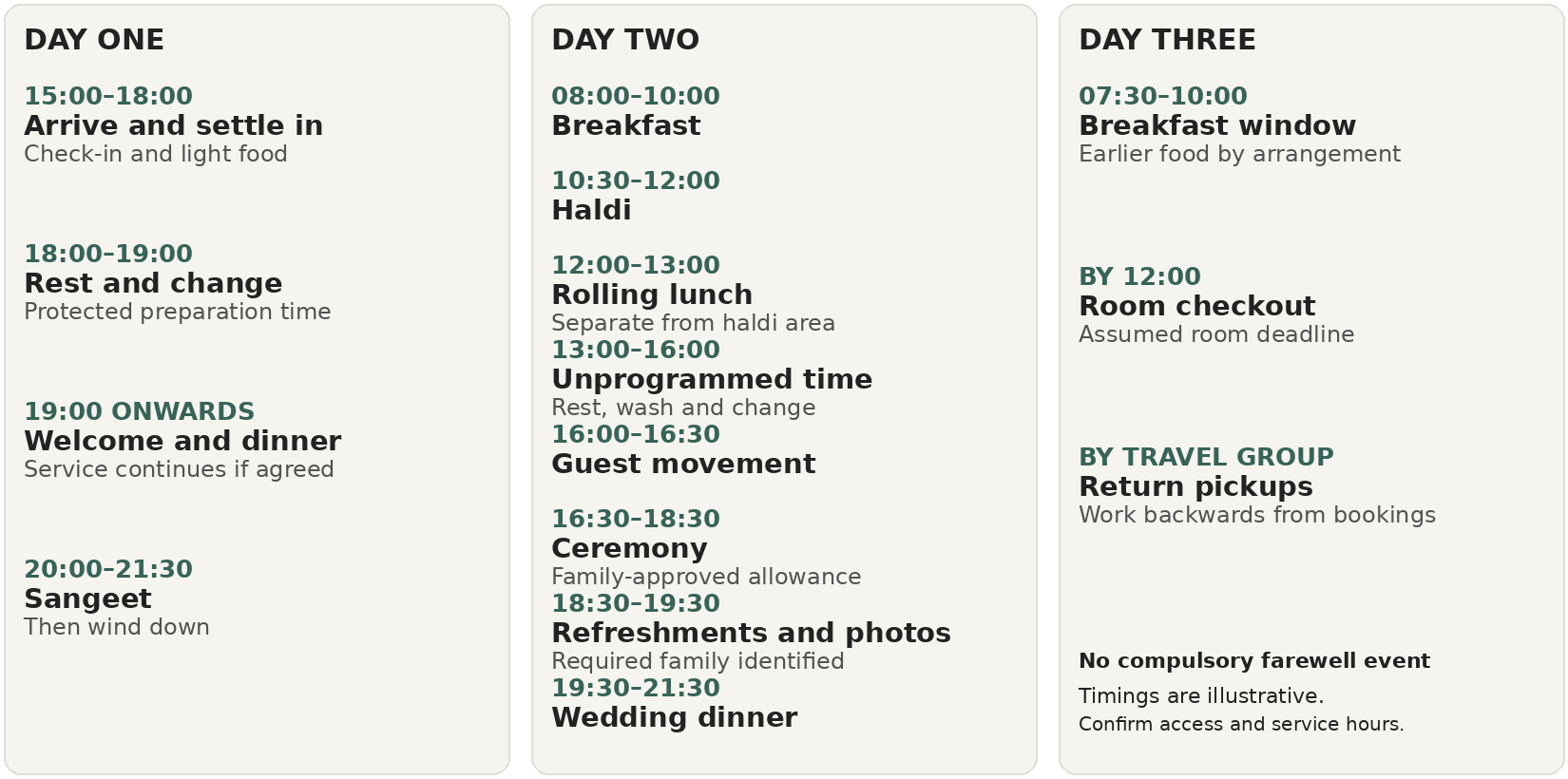
Consider an invented wedding with 180 attendees: 140 staying at the main property for two nights and 40 local guests joining the ceremony and wedding dinner. Assume the residential arrivals can be ready by 6 pm on day one. The couple and officiant have agreed a day-two ceremony starting at 4.30 pm, with a two-hour allowance. Different rituals or travel plans require a different timetable.
Read the sample timeline as text
Day one
- 15:00–18:00: Arrive and settle in. Check-in and light food.
- 18:00–19:00: Rest and change. Protected preparation time.
- 19:00 onwards: Welcome and dinner. Service continues if agreed.
- 20:00–21:30: Sangeet. Then wind down.
Day two
- 08:00–10:00: Breakfast.
- 10:30–12:00: Haldi.
- 12:00–13:00: Rolling lunch. Separate from haldi area.
- 13:00–16:00: Unprogrammed time. Rest, wash and change.
- 16:00–16:30: Guest movement.
- 16:30–18:30: Ceremony. Family-approved allowance.
- 18:30–19:30: Refreshments and photos. Required family identified.
- 19:30–21:30: Wedding dinner.
Day three
- 07:30–10:00: Breakfast window. Earlier food by arrangement.
- By 12:00: Room checkout. Assumed room deadline.
- By travel group: Return pickups. Work backwards from bookings.
No compulsory farewell event. Timings are illustrative. Confirm access and service hours.
All timings are illustrative and use the 24-hour clock. Gaps remain unprogrammed. Overnight rest is outside the displayed activity windows.
The first evening combines the welcome meal with the sangeet rather than introducing another compulsory gathering. Dinner begins before the performances and can continue into them if service is agreed. Confirm a food-service window for late arrivals so that missing the opening does not mean missing a meal.
On day two, a rolling lunch is available separately from the haldi area, allowing guests to wash before eating. The three-hour break assumes lunch and any required movement finish by 1 pm. That interval may include washing, changing, resting or simply talking with family. Do not quietly fill it with a compulsory photoshoot or excursion. The couple's preparation and photography plan must be checked separately.
The 6.30-7.30 pm interval also needs a plan: any required family photographs, refreshments and where other guests can sit. Confirm food availability for guests who need an earlier meal. The local guest invitation should specify its own arrival point and reporting time rather than sending everyone the residents' full-day instructions.
| Plan choice | What it changes |
|---|---|
| Compulsory welcome at 5 pm | Wave B's assumed readiness is 6 pm; it misses the start. |
| Shared celebration at 7 pm | One hour beyond wave B's assumed readiness; reassess with real journeys. |
| Excursion in the day-two break | Replaces some of the protected changing, rest and conversation time. |
This programme depends on confirmed room and space access, suitable preparation time and agreed service hours. It is not a schedule operated by any hotel pictured here. Check the relevant venue conditions before extending entertainment or assuming an area can be used late.
Give changeovers their own clock
Guest free time is not automatically production time. If haldi ends at noon, the decor team may still be waiting for guests to leave, catering to clear and the venue to release the area. Only then can the agreed removal, installation, technical checks and cleaning begin.
For a shared space, list those steps in order with the teams responsible and durations confirmed by them. For separate spaces, verify that setup access does not cross the guest route or disturb a function already underway. Moving flowers between functions also needs a collection time, a route and a receiving setup ready for them.
In the sample, ceremony readiness is a separate deadline before guest movement begins at 4 pm. If the production plan cannot meet it, change the design, secure a different approved space or revise a flexible function. A five-minute gap on the guest card cannot absorb an unplanned reset.
Use this dependency worksheet
Before circulating the programme, copy these rows into your planning sheet. Add a named owner, decision deadline, confirmation status and the document or message supporting each answer. A blank confirmation is an open question, not permission to assume.
| Decision | Depends on | Evidence to obtain |
|---|---|---|
| First essential function | Required guests reaching readiness | Travel groups and confirmed room access |
| Ceremony reporting time | Family and officiant sequence | Agreed ritual and participant timings |
| Space handover | Clearance and production tasks | Venue access and team-confirmed reset plan |
| Meals between functions | Arrival waves and kitchen service | Menu and service windows |
| Return pickup | Travel reporting requirements | Confirmed booking and transport plan |
For example: day-two guest movement at 4 pm depends on the production lead and venue accepting the completed setup before that time. Record the actual handover deadline they agree. If it is missed, a named planner coordinates the agreed alternative and guest update; the family should not have to discover the issue at the entrance.
Decide what can move before it needs to
Mark each programme item as essential, flexible or optional. Identify one element that can shorten or drop if the day slips, and who can approve that change. Protect the ceremony requirements, meals and transport commitments first. Keep the guest-facing card simple, while the operating schedule records dependencies and current decisions.
Compare the time cost of an extra outing
Before adding a viewpoint visit or off-site lunch, count the complete door-to-door interval, including assembly and loading. In a separate hypothetical comparison, if all 180 guests make a 90-minute round trip, that consumes 270 aggregate guest-hours: 180 multiplied by 1.5 hours. Each guest spends 90 minutes travelling; 270 hours is the combined total, not elapsed time or a financial saving.
That calculation does not make an outing a bad choice. It makes the trade-off visible. Ask whether the experience is worth replacing the rest, conversation or preparation that would otherwise occupy the interval. An optional outing needs a workable return time and an appealing plan for people who stay behind.
Work backwards from departures
Group return transfers by confirmed flight or train bookings. Begin with the relevant operator's reporting requirements, then add the transfer, loading and checkout allowances. IndiGo currently recommends reporting for domestic check-in at least two hours before scheduled departure; guests must check their own carrier and flight instructions. [2]
A noon checkout is a room deadline, not a shared departure time. Arrange early breakfast or packed food where agreed, luggage collection and a contact for each pickup. For guests travelling later, confirm luggage storage, a waiting area, meals and any room extension separately. Avoid a compulsory farewell ritual that early departures cannot attend.
Questions families often ask
Can three functions fit into two nights
They can in some plans, but the count alone tells you little. Check ceremony length, travel waves, preparation and production access. The sample fits an evening sangeet, daytime haldi and wedding ceremony with dinner; it assumes the stated timings work for the family and venue.
Should we book an extra night
Consider it for anyone whose confirmed journey conflicts with an essential function, or whose room access is needed earlier. Price the relevant guests, rooms, meals and transfers. An extra night for selected participants may solve the conflict without extending every guest's stay.
What if guests stay in another hotel
Add shuttle reporting, loading and return choices to every affected function. Check the second hotel's room timings independently. Do not count a transfer period as rest or assume everyone will want the final return vehicle.
How should guests receive changes
Issue one dated programme with clear locations, reporting times and a hospitality contact. Send changes through the agreed communication channel, stating exactly what moved and which guests it affects. Give transport and hotel teams the same current version.
Plan your wedding with Bells N Blooms
Bells N Blooms is a destination wedding planning company with in-house decor. We can discuss the programme, guest hospitality and design together as part of the agreed scope. Explore our planning services, then send your proposed dates, destination or venue shortlist, overnight and day-guest counts, number of nights, and overall budget including the venue, stay and celebrations. Tell us whether you need full planning with decor or decor-only support. Include any fixed ceremony requirement or difficult arrival connection so it can shape the discussion from the start. [4, 5]
Sources
Public facts checked on 8 October 2026. The hotel and airline pages describe their published conditions, which can change. Confirm the terms applying to the actual booking. Calculations and the sample programme are original hypothetical teaching examples.
1. JW Marriott Mussoorie official overview
Supports the published 15:00 check-in, 12:00 checkout, 65.7 km airport distance and transport distinction. It does not verify a wedding booking.
2. IndiGo airport check in requirements
Supports the attributed domestic airport reporting example. The actual carrier and flight instructions govern each guest's journey.
3. BnB room blocks and resort buyouts guide
Related accommodation guide. Its existing room-night and contract content is linked rather than repeated.
4. Bells N Blooms wedding planning services
BnB service information and planning scope.
Enquiry destination for the qualified call to action.
6. Virangana and Chirag at Glenville
Published portfolio and provenance of the two illustrative Glenville photographs. Photography by Visionary Swarnima.
7. Google guidance on helpful people first content
Editorial reference for original, useful decision support. No search volume, ranking or enquiry forecast is claimed.