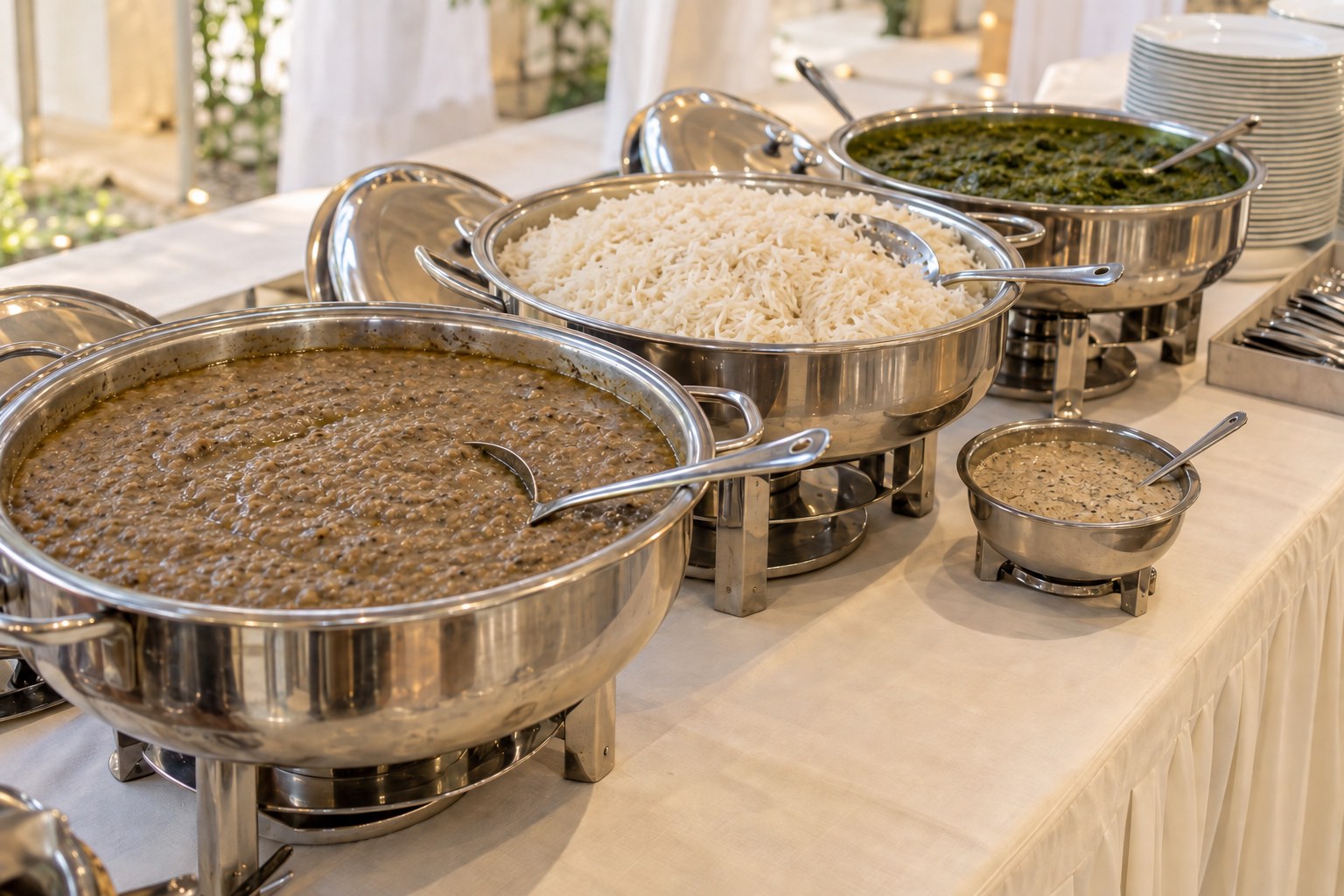
For a Garhwali lunch, I would start with chainsoo, rice and til ki chutney. It is a familiar home-style combination, with enough flavour to build a lunch around. Harsil rajma with Dehradun basmati is another favourite worth keeping simple: a generous serving of rajma, freshly cooked rice and chutney on the side.
At a wedding in Uttarakhand, these flavours can sit comfortably alongside the food your families already love. One regional lunch gives guests a chance to try the local dishes without having to build every meal around them.
Build the lunch around one regional dish
Chainsoo gets its deep flavour from roasted black gram. Plain rice lets that flavour come through, with a little til ki chutney alongside. At the tasting, the roasting and consistency deserve attention. A plate with the accompaniments will tell you more than a spoonful of the dal on its own.
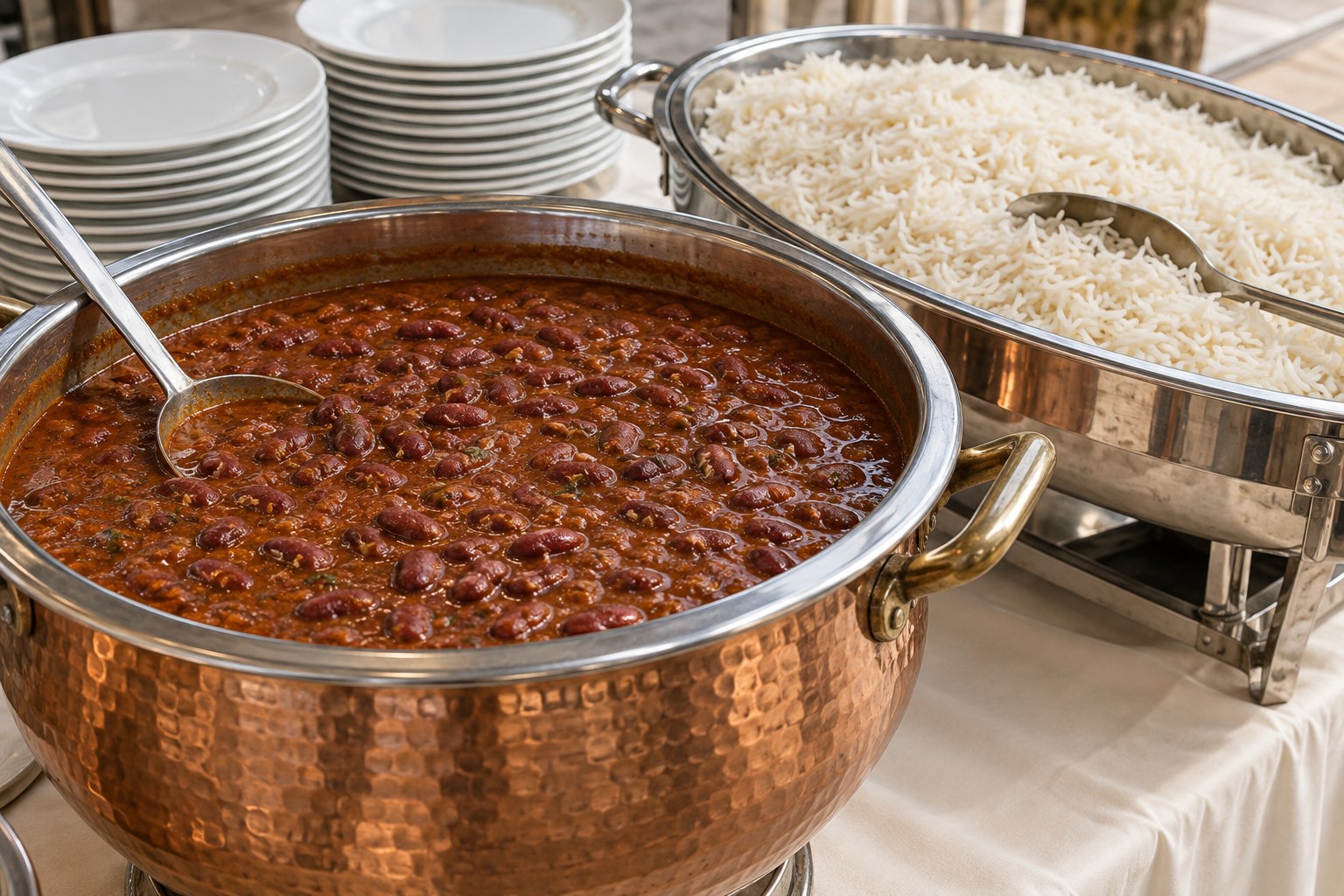
For the rajma, sourcing matters. If the menu promises Harsil rajma or Dehradun basmati, the kitchen should confirm it can supply them before the menu is printed. Where an alternative is needed, settle it together and use the right name.
Kafuli, made with leafy greens such as spinach or fenugreek, brings a different flavour alongside the pulses and rice. For a Kumaoni touch, there is dubuk, a smooth pulse preparation. Chainsoo, rajma and dubuk do not all need to appear at the same lunch; one can take the lead, leaving room for vegetables and a regional sweet.
Give the Pahadi food one good meal
For a two-night wedding, I would put the regional spread at lunch, perhaps after the haldi. Guests have time to sit together, try a dish they do not know and ask for another helping. Keep the service comfortable, especially if the haldi and lunch are on the same lawn.
Here is a menu I would take to the chef as a starting point:
- Chainsoo with steamed rice and til ki chutney
- Kafuli and a seasonal vegetable
- Fresh rotis, served as they are ready
- Jhangore ki kheer for dessert
If rajma is a family favourite, make Harsil rajma and Dehradun basmati the centre of that lunch, with a vegetable, chutney and fresh rotis around it. For a more Kumaoni direction, try dubuk with rice and choose Bal Mithai or Singodi for the sweet. Take these ideas into the tasting and build the final menu with the kitchen that will cook it.
A simple dal, rice and roti can stay on the menu as a familiar alternative. There is room for a favourite from the other family’s home region too. That is often what makes a wedding menu feel personal.
Keep the other meals different
On arrival day, guests may reach the hotel hungry and at different times. A straightforward lunch of dal, rice, vegetables, rotis and curd is easy to settle into. Agree on what late arrivals will receive; a buffet that has already closed is no help to someone who has just checked in.
The welcome dinner can be built around your family’s favourites. Paneer tikka, a vegetable starter, one dal and a couple of mains may be enough before breads and dessert. With a fuller Pahadi lunch the next day, repeating the same dishes adds little.
Live counters need a little more thought at the wedding dinner. Their appeal depends on good service, enough space and a queue that does not cut across the ceremony area. Older relatives may appreciate being served at their seats while everyone else moves between the counters.
Breakfast has its own rhythm. Some guests will want poha or idli, others a hot paratha and tea. The kitchen needs to know when the first guests are leaving so they have something to eat before the regular service opens. Our two-night wedding itinerary can help you fit these meals around the functions.
Choose the sweet with the meal in mind
Jhangore ki kheer is a lovely choice after the regional lunch. Bal Mithai brings the flavour of Almora to the menu, while leaf-wrapped Singodi gives guests something different to try. Taste the sweets as carefully as the main course, and ask how they will be brought in, stored and served.
Smaller portions let guests try an unfamiliar sweet, with a familiar dessert alongside if you wish. The kitchen should also confirm ingredients such as dairy, nuts and sesame across the menu. Any separate dietary meal is best agreed directly with the guest who needs it.
What I would settle at the tasting
By the end of the tasting, you should have tried the lunch as a complete plate: dal or rajma with rice, greens, chutney and the sweet. The agreed spice levels, ingredients and substitutions belong in the written menu so the cooking team has the same brief you tasted.
The serving arrangements matter just as much. Whether your venue uses its own kitchen or allows an outside caterer, the brief should name who is cooking and who is serving, with meal timings, final numbers, vendor meals and dietary arrangements included in the quote.
When you speak to us about your Uttarakhand wedding, bring the dishes your families want to keep. We can work through the menu brief alongside your venue and functions, and agree on the catering arrangements and responsibilities. You can also explore our starting packages before we discuss your plans.