A wedding favour should feel like a thank-you, not another item your guests have to work out how to pack. For a destination wedding in Uttarakhand, I would choose one thoughtful local detail before building a large hamper around it.
That might be a small Aipan keepsake, a neatly packed tea selection or a food gift your family genuinely enjoys. The best choice depends on who is travelling, how they are getting home and whether you want the gift used during the stay or kept afterwards.
Decide that first. The box and ribbon can follow.
Choose a purpose before choosing a product
A welcome gift and a departure favour serve different needs. Something to enjoy in the room can be opened during the wedding; a keepsake needs to survive the journey home.
If most guests are flying, favour compact pieces that fit into luggage without their own carry bag. If relatives are driving together, a slightly larger gift may be manageable, but it still needs a sensible place in the car. For guests continuing to another destination, ask yourself whether the gift will be pleasant to carry for several more days.
You do not need the same package for every household. A small keepsake per family and a simple individual thank-you can be more considered than sending three identical bulky hampers home with people travelling together. Decide the gifting unit before approving quantities.
Aipan can bring a real connection to Kumaon
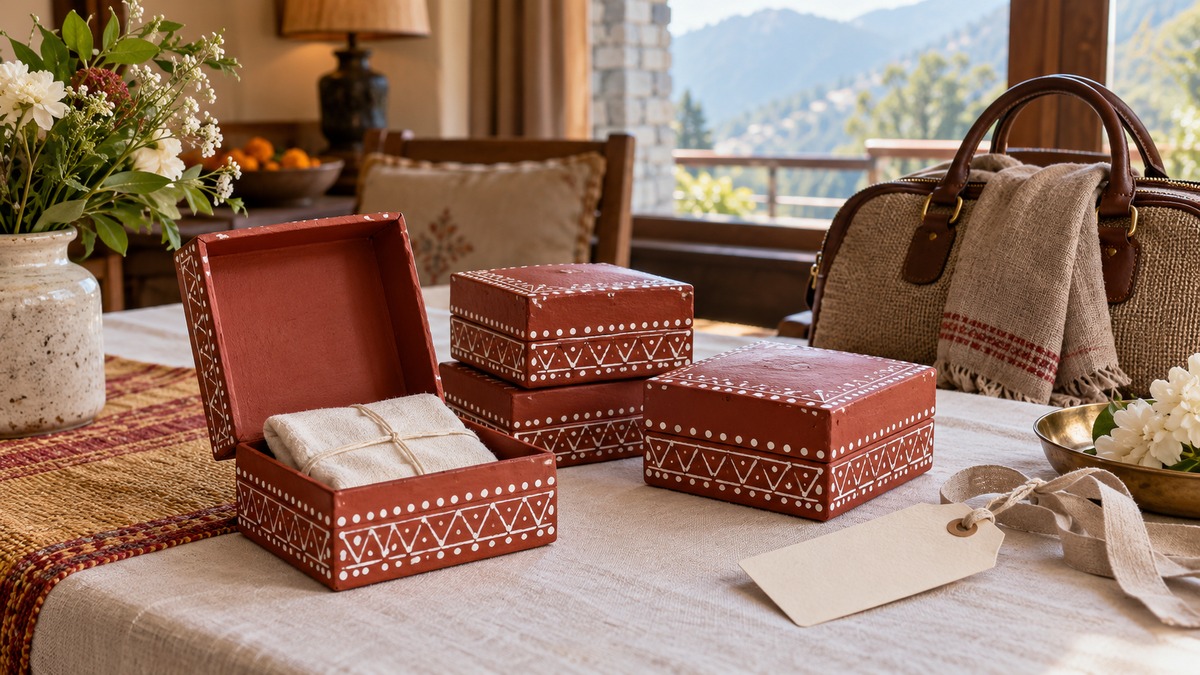
Aipan offers a distinctive local direction for a lasting gift, with its recognisable red-and-white designs.
Aipan motifs can carry religious and cultural meanings, including connections with particular rituals and festivals. Let the maker guide the choice rather than treating every design as interchangeable.
A small painted keepsake box or framed piece could work well, provided the maker confirms the dimensions, finish and packing. Ask the maker what the motif means, whether it suits the object and occasion, and how they recommend presenting it.
Also ask whether the piece is hand-painted, printed or simply inspired by Aipan. Each can have its own place, but the gift note should describe what you have actually commissioned. A local-looking design does not, by itself, establish who made it or where it was produced.
A short card crediting the maker and explaining the chosen design can say more than a large wedding monogram. Keep the couple's names on the note or outer sleeve if you want the object itself to remain easy to use at home.
For food gifts, start with something guests can identify
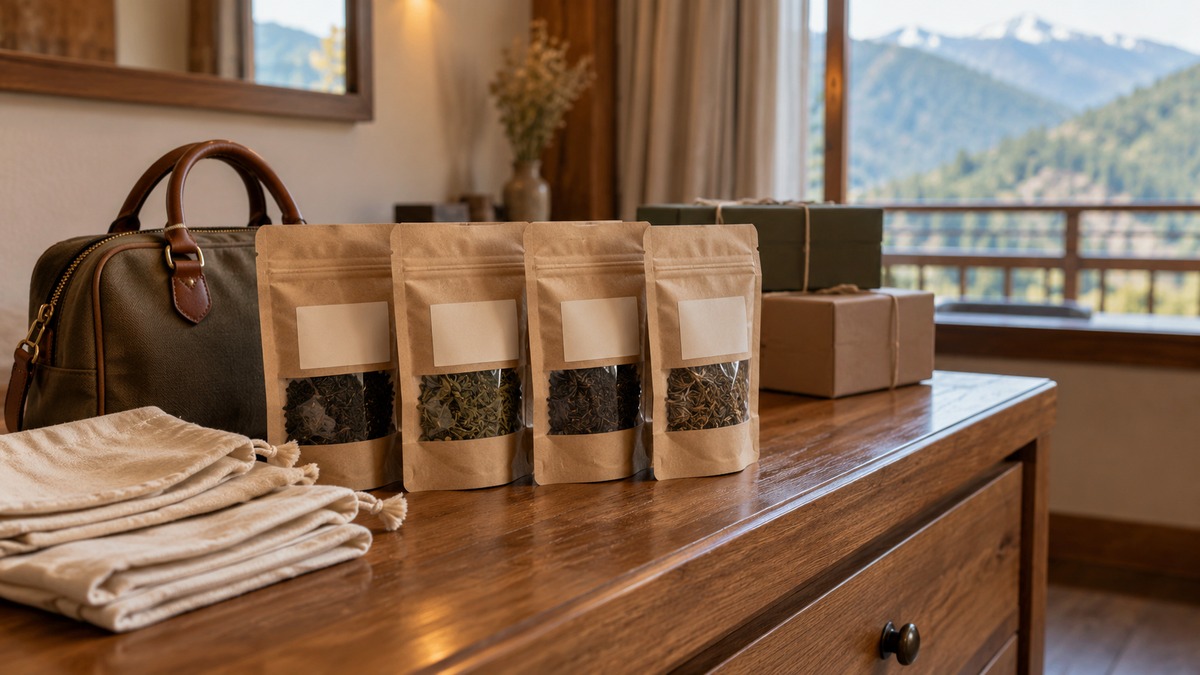
There are local options beyond a standard box of sweets. Dehradun-based Naturally Pahadi's wedding gifting collection, for example, lists herbal tea, Timru herb salt, honey, dry fruit and millet-and-nut date bites, and offers bulk gifting. Ask for a sample before committing so you can check taste, labels and packing.
Choose a small selection rather than including everything because it sounds regional. Ask the producer for the exact ingredients, allergen information, storage instructions and usable shelf life for the batch supplied. A beautifully named product is still difficult to give thoughtfully if a guest cannot tell what is inside.
Keep that information with each edible item. If you change the outer packaging, do not hide or discard the supplier's labels. For guests with dietary restrictions, agree a suitable alternative with the producer; avoid describing a hamper as safe for everyone.
Match the gift to the journey home
Jars and bottles deserve a little more thought than flat keepsakes or sealed dry products. They add weight and need protection against leakage or breakage. Before choosing honey or a liquid drink, check the relevant airline's current baggage rules and, for international guests, destination food-import rules. Do not promise that a locally purchased food gift can travel everywhere.
For a wedding with guests arriving from several countries, a non-food option may be the simpler choice. You can still offer a regional treat during the stay without making it part of their onward luggage.
Ask to see one fully packed sample, not just the product photograph. Hold it, open it and check how much space it takes. A compact gift that arrives intact is more useful than a generous hamper with a fragile handle and nowhere to fit in a suitcase.
Keep the ordering decisions with your planning team
Once you choose the direction, your planner can bring the quantities, approved sample, delivery date and hotel handover into one arrangement. You should be choosing the gift and reviewing the finished sample, not chasing cartons while guests check in.
For handmade pieces, ask the maker what quantity and completion date they can realistically commit to before announcing the idea to family. Agree how much variation you are happy with, what counts as damage and how replacements will be handled. Do not assume identical production or an unlimited last-minute top-up.
For room delivery, decide whether the gift goes to each guest, each couple or each room. Those counts are not interchangeable. Keep a separate record for gifts handed out at departure so a room change does not become a missed thank-you.
Let the gift feel like you
You do not have to turn every favour into a complete introduction to Uttarakhand. One well-chosen object, a clear connection to its maker and a personal note are enough.
If you are weighing up hampers, room gifts or departure favours, bring the idea into your guest welcome and hospitality plans. Start with your guest list and travel plans. Then choose something that feels generous in thought, fits the occasion and is easy to take home.