A mandap can look perfectly placed on an empty lawn and feel quite different once the family is seated. A floral pillar may hide the couple from one side. The shaded chairs may be farther from the ceremony than expected. A photographer may need to stand exactly where the parents hoped to sit.
For a daytime wedding in Dehradun, settle the mandap position before finalising the decorative details. Compare two possible locations on the lawn, with the ceremony timing and guest seating in mind.
Start with the ceremony, then look at the lawn
Before the site visit, confirm the expected ritual sequence and seating arrangement with your pandit and family. Establish where the couple, parents and other participants need to sit, how they will move, and whether any orientation requirements apply.
This gives the decorator a real ceremony to design around. A visually balanced mandap drawing can still leave too little working room once the ritual setup and people are included.
Take the expected guest-arrival time, ceremony start and likely finish to the visit. Guests experience the setting while waiting, not only during the photographs. If the programme runs late, they will still need a comfortable place to sit.
Compare two positions at the relevant time
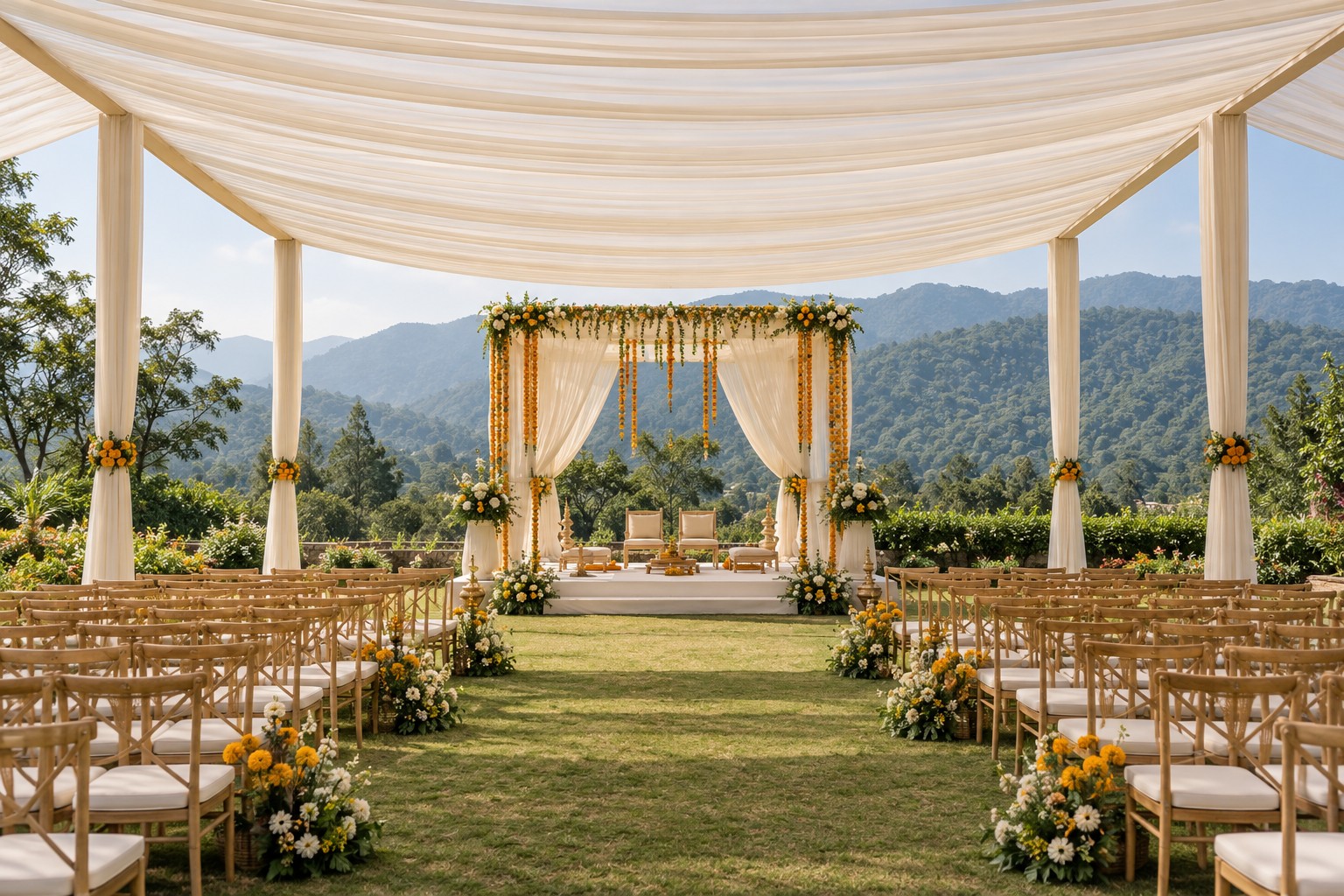
Ask the venue to identify two feasible mandap positions rather than immediately accepting the usual backdrop. Both should be acceptable for installation and access. Then inspect them around the hours your guests will actually occupy the space.
Dehradun should not be treated as uniformly cool simply because it is associated with the hills. The district administration notes that climate varies considerably with elevation and that summer heat in the Doon can be intense. The useful question is what happens on your particular lawn, in your wedding month.
At each position, mark the couple’s seats and the first and last guest rows. Look at where shade falls now and where it appears to be moving. If the visit is in a different season, ask your team to assess the wedding-date conditions rather than assuming today’s shadows will repeat.
A lawn in the Doon and a hillside terrace above it need their own assessment. Buildings, slopes and trees change what you see from a chair and where shade reaches. Avoid choosing a universal compass direction from an online tip; date, timing and the actual surroundings all belong in the decision.
Sit down before approving the backdrop
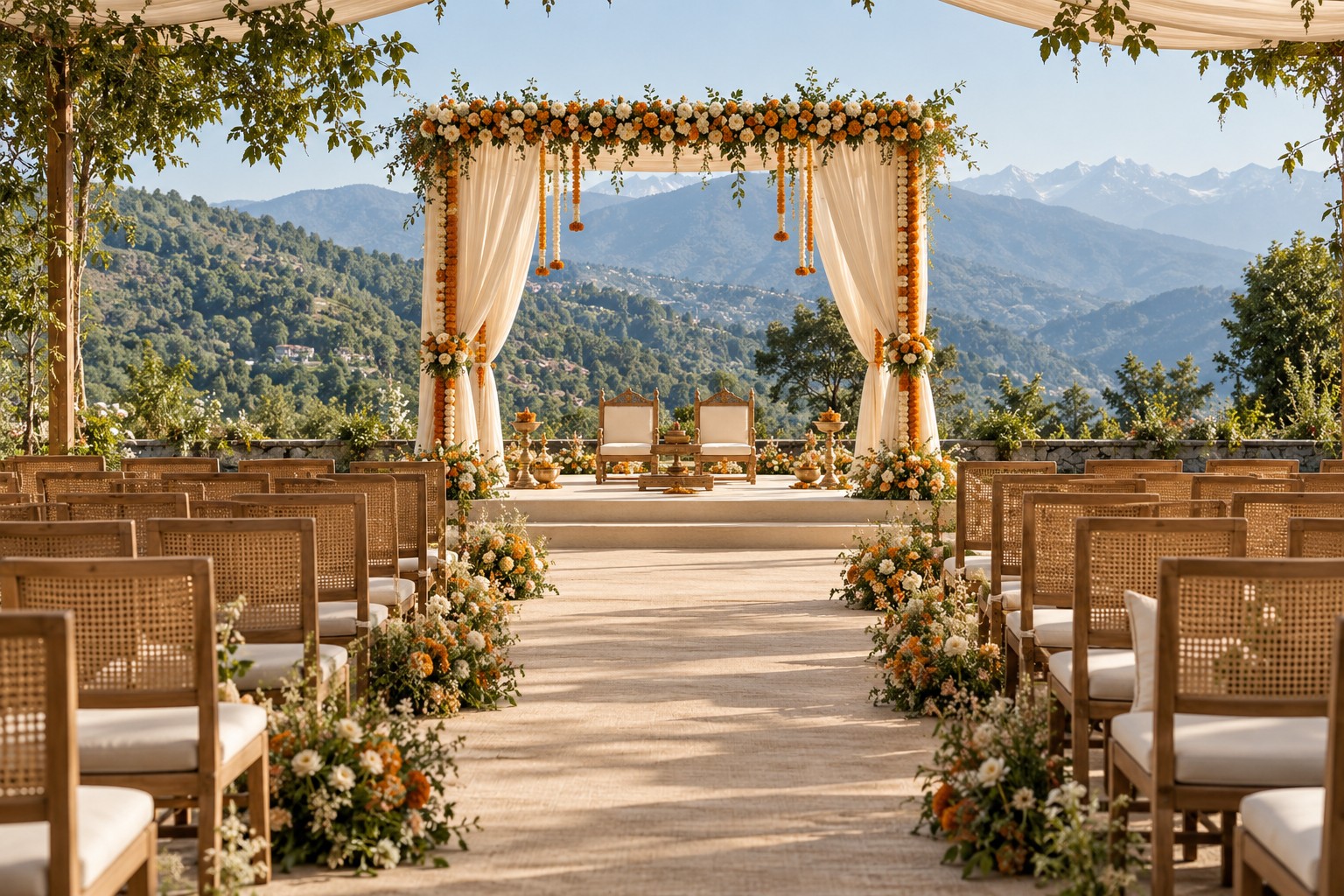
Place a few chairs where guests will sit and view each proposed mandap from seated eye level. Include a central seat, an outer seat and a position near the back.
Can you see the couple’s faces and the main ritual area? Would a front pillar, dense floral arrangement or low hanging feature interrupt that view? If so, first consider adjusting the decoration or seating angle. A taller platform is not automatically the simplest answer, especially if it complicates access.
Compare the two locations using the same test. A beautiful backdrop with several compromised rows may be less successful than a quieter corner where guests can comfortably follow the ceremony.
Keep accessible seating integrated with the family arrangement. Check the route from arrival to the chairs, including grass, steps and any temporary flooring.
Let shade and photography share the decision
Invite the photographer to review the proposed positions before the décor is locked. Ask how the light will fall on seated faces and whether the canopy or floral roof creates uneven patches of light.
Then bring the guest rows into that conversation. Shade over the couple does not mean the audience is shaded. A canopy extension may help, but its supports and edges must be included in the drawing so they do not create new obstructions.
Ask the installation team to confirm suitable materials, fixing arrangements and any venue restrictions. Keep the ritual fire and fabric arrangement subject to the venue’s and responsible professionals’ safety requirements.
Reserve workable camera positions alongside the seating plan. Otherwise, an apparently clear guest view may disappear as soon as the photo and video team starts working.
Approve the position and the fallback together
Before signing off, consider a delayed start and unsuitable weather. Identify who will decide whether the ceremony moves, where it would move, and which layout changes would follow. Do not assume the outdoor design transfers unchanged.
The final drawing should show the chosen mandap position, seating blocks, shade coverage, ritual access and camera space. Keep a dated site photograph with it so everyone is discussing the same location.
For a daytime wedding, good placement makes the decoration easier to enjoy. Choose the position that works for the people who will spend the ceremony there, then build the visual design around it.
Explore our wedding décor design in Dehradun and Uttarakhand, and share your venue, ceremony timing and inspiration images when you enquire. Our home-page starting packages provide an initial guide to scope; the layout should respond to the setting and the celebrations you are planning.